

Large Dog Beds
Large dog beds need two things a small bed does not: enough flat area for the dog to stretch out, and a base that does not flatten under its weight. The biggest here is 45 × 31 in (115 × 80 cm).
Past about 55 lb (25 kg) two things change. They need enough flat area to stretch out completely, and the bed has to carry that weight without bottoming out. A pad that suits a spaniel flattens under a mastiff within weeks. Length tells you more than the breed name, so measure them before filtering.
Size comes second. First, how does your dog lie down?
 Large, but curls up
The Oval Plush Dog Bed or the Shaggy Plush Donut Dog Bed in its biggest sizes
Large, but curls up
The Oval Plush Dog Bed or the Shaggy Plush Donut Dog Bed in its biggest sizes Rests its chin on a wall
A sofa bed: the Waterproof Dog Sofa Bed with Inner Pad or the Cushioned Dog Sofa Bed in XXL
Rests its chin on a wall
A sofa bed: the Waterproof Dog Sofa Bed with Inner Pad or the Cushioned Dog Sofa Bed in XXL Runs hot in summer
The ice-silk mat with a headrest in L or XL
Runs hot in summer
The ice-silk mat with a headrest in L or XL
-
Washable Memory Foam Dog Bed
Regular price From $52.56 USDRegular price$0.00 USDSale price From $52.56 USD -
Fluffy Dog Basket Bed
Regular price From $49.45 USDRegular price$0.00 USDSale price From $49.45 USD -

 Sold out
Warm Dog Sofa Bed
Regular price From $51.43 USDRegular price$0.00 USDSale price From $51.43 USDSold out -
Foam Dog Bed with Washable Cover
Regular price From $25.89 USDRegular price$0.00 USDSale price From $25.89 USD -
Corduroy Dog Bed
Regular price From $89.65 USDRegular price$0.00 USDSale price From $89.65 USD -
Cushioned Dog Sofa Bed
Regular price From $33.88 USDRegular price$47.51 USDSale price From $33.88 USDSale -
Square Plush Dog Bed
Regular price From $40.39 USDRegular price$0.00 USDSale price From $40.39 USD -
Washable Square Dog Sofa Bed
Regular price From $29.04 USDRegular price$0.00 USDSale price From $29.04 USD -
Waterproof Dog Sofa Bed with Inner Pad
Regular price From $41.88 USDRegular price$0.00 USDSale price From $41.88 USD -
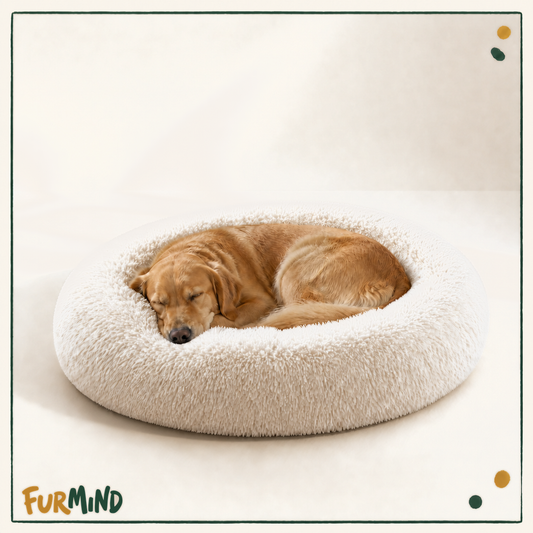
Shaggy Plush Donut Dog Bed
Regular price From $23.50 USDRegular price$0.00 USDSale price From $23.50 USD -
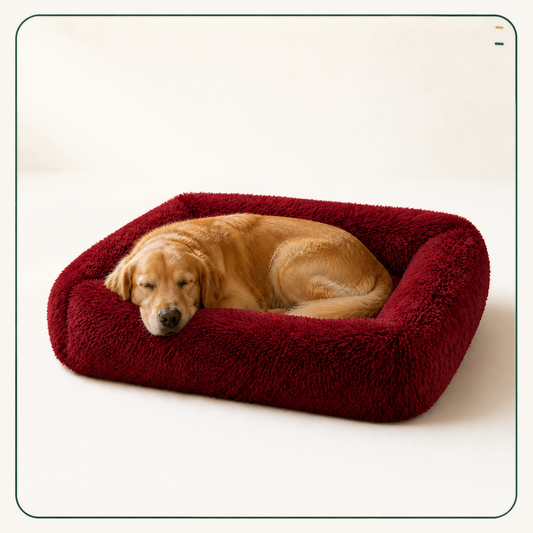
Shaggy Plush Square Dog Bed
Regular price From $36.13 USDRegular price$0.00 USDSale price From $36.13 USD -
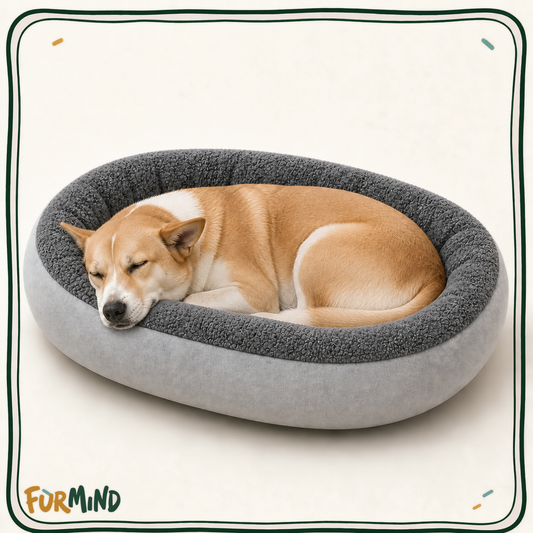
Oval Plush Dog Bed
Regular price From $26.98 USDRegular price$0.00 USDSale price From $26.98 USD -
Cooling Ice Silk Mat with Headrest
Regular price From $29.45 USDRegular price$0.00 USDSale price From $29.45 USD -
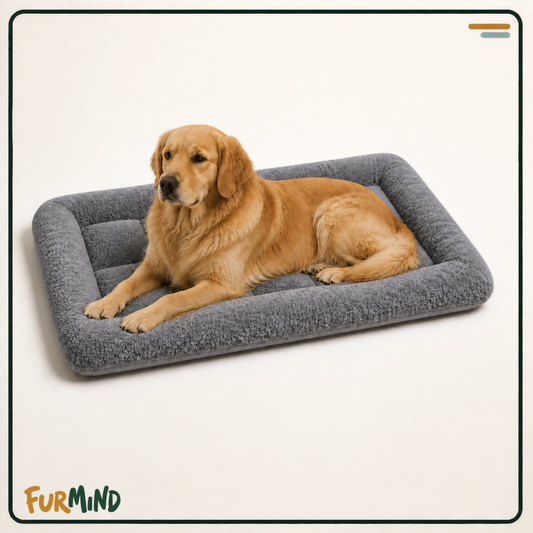
Plush Quilted Dog Mat
Regular price From $43.36 USDRegular price$0.00 USDSale price From $43.36 USD









Elsewhere in the catalog


From the journal
What decides it at this size
Area first, then depth
A large dog lying fully stretched needs roughly 31 in (80 cm) of sleeping length, often more. Where a bed has raised sides, the inner area is the number that counts — the outside dimensions include a rim they cannot lie on, and on a big bed that rim is wide.

Weight is what decides the fill
At this size, a soft filling gives way under them until there is very little left between the dog and the floor. A firmer base keeps its shape instead. Comparing two beds at this size, the fill tells you more than the outer fabric does.
One thing worth knowing before rather than after: a large cover often will not fit a home washing machine. Some are made to be cleaned in sections instead, and the listing notes it where that applies.

The biggest bed here is 45 by 31 in (115 by 80 cm)
That is the corduroy bed in its largest size. The widest cooling mat runs 47 by 30 in, and the car trunk mat is 51 in long but only 20 in wide, which suits a dog that curls rather than one that sprawls. If your dog measures past 39 in (100 cm) nose to tail, those three are the ones with room left over.

A donut sold as 28 in is not a 28 in bed
Round beds are listed by outside diameter, and the raised ring takes roughly a quarter of it. The 28 in (70 cm) donut leaves a sleeping circle nearer 20 in. That is fine for a dog who curls into a ball and wrong for one who stretches out, which is why the same size number means two different things depending on how your dog sleeps.

Decide where it goes before you pick the size
A crate pan and a car trunk both have hard limits the bed has to fit inside, and both are measured across the base rather than the opening. A floor bed has no such limit, so it can be the size the dog needs rather than the size the space allows. Two of the beds here are cut for a trunk or a crate; the rest assume a floor.

What a large dog does to a bed that a small one does not
Load per square inch, not total weight. An 88 lb (40 kg) dog lying on its side puts most of that load through the shoulder and the hip, across an area not much larger than a dinner plate each. That is the load that flattens fill, and it is why two beds of the same fibre behave differently at 18 lb and at 88 lb.
It is also why a large bed needs a base with structure rather than more of the same stuffing. Adding loft to loose fibre makes a bed taller, not firmer, and it flattens to the same place a few months later.

The washing problem nobody mentions until the first accident
A cover cut for a 45 by 31 in (115 by 80 cm) bed does not fit a domestic drum. As a rough guide, most domestic drums take covers up to roughly a medium bed; past that the options are a laundromat or a bed designed to be cleaned in sections.
This is worth deciding before you buy rather than after. Nine of the sixteen beds here have a cover that comes off, and on the largest of those the cover is the part you should measure against your machine, not against your dog.

Height matters more as the dog gets older
A tall wall is a step. A young dog steps over an 8 in (20 cm) rim without registering it; a ten-year-old with stiff hips registers it twice a night and will start choosing the floor instead.
If the dog is already slowing down, look for a bed with one dropped side or no wall at all. It is a smaller decision than the fill and it is the one that decides whether the bed gets used in year three.

Questions people ask about large dog beds
What is the best dog bed for large dogs?
Start with how your dog sleeps, then the size. A large dog that sleeps stretched out needs a flat bed. The Corduroy Dog Bed runs to 45 × 31 in (115 × 80 cm), and the Foam Dog Bed with Washable Cover lists its XXL size (41 × 26 in, 105 × 65 cm) for dogs up to 99 lb. A large dog that curls up does well in a bed with a wall, like the Oval Plush Dog Bed, which goes up to 39 × 33 in (100 × 85 cm). To size it, measure the dog lying stretched out, nose to the base of the tail, and add 6 to 8 in (15 to 20 cm).
What is the largest dog bed size you carry?
45 by 31 in (115 by 80 cm), on the corduroy bed in its largest size. The Shaggy Plush Square Dog Bed is a little shorter and wider at 43 × 35 in (110 × 90 cm). The widest flat mat is the ice-silk mat with a headrest, at 47 × 30 in (120 × 75 cm).
How do I tell a bed that will hold up from one that will not?
Weight, before anything else. A bed made for a large dog has a base that keeps its shape under load, and that base weighs something. A large bed that ships at a kilogram has fibre inside, not foam, and it flattens.
Are these washable?
Some have a cover that comes off, and some are one piece and cleaned in place. Each listing says which. The Foam Dog Bed with Washable Cover and the ice-silk mat with a headrest both have covers that come off. One thing to check first: a cover cut for a 45 in (115 cm) bed often will not fit a home washing machine.
Will one of these fit inside a crate?
Most of these assume floor space. Measure the inside base of the crate, not the door or the outside frame, and compare that to the flat size of the bed. In a crate, a flat bed with no walls gives the dog the whole floor.
What do people use instead of a dog bed?
Folded blankets, a spare duvet, or an old sofa cushion. They work until they do not: none of them keep a shape under a heavy dog, so they compress to nothing at the shoulder and hip, which is exactly where a large dog carries weight against the floor.


