

Cooling Dog Beds
When a dog leaves its bed for the kitchen tile, a dog cooling mat gives it that same cool surface somewhere better. Everything here is ice-silk with no gel or water inside, in sizes from 18 × 12 in (45 × 30 cm) to 47 × 30 in (120 × 75 cm).
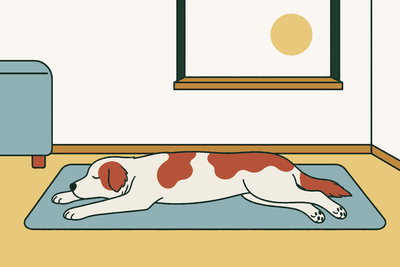
In summer they leave the bed and lie on the kitchen tile. A cooling mat works the way that tile does, carrying heat away on contact instead of holding it against them. Ice-silk does it by staying smooth and open enough for air to move through. A pale plush bed does not do it at all.
Pick by where your dog lies down and how it lies there.
 Is large and sleeps stretched out
The headrest mat in L or XL (39 × 30 in or 47 × 30 in)
Is large and sleeps stretched out
The headrest mat in L or XL (39 × 30 in or 47 × 30 in) Is small and curls up against a wall
A raised-rim bed from the dog beds page
Is small and curls up against a wall
A raised-rim bed from the dog beds page Chews its bedding
A flat mat with nothing inside, and watch the first few nights
Chews its bedding
A flat mat with nothing inside, and watch the first few nights
-

 Sold out
Cooling Ice Silk Bolster Dog Bed
Regular price From $30.16 USDRegular price$0.00 USDSale price From $30.16 USDSold out -
Cooling Ice Silk Mat
Regular price From $22.86 USDRegular price$0.00 USDSale price From $22.86 USD -
Cooling Ice Silk Mat with Headrest
Regular price From $29.45 USDRegular price$0.00 USDSale price From $29.45 USD


Elsewhere in the catalog


From the journal

How a cool-touch surface works
Nothing here is refrigerated, and that is the point
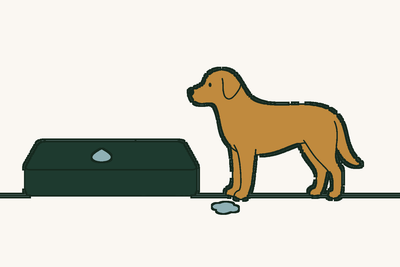
There is no gel pack and no water bladder in any of these three, so there is nothing to freeze, nothing to puncture and nothing to replace at the end of the season. The ice-silk weave conducts heat away from the dog on contact and lets air move through instead of trapping it against the coat.
What you get is a surface that stays cooler than the dog, not a cold one. If you were expecting cold to the touch, that expectation is what disappoints people about cooling mats generally. The physics is conduction, not refrigeration.

Three items, from 18 × 12 in (45 × 30 cm) to 47 × 30 in (120 × 75 cm)
That is the whole range and we would rather show you the size of it than pad it out. A low bolster bed at 18 × 14 in to 30 × 23 in (45 × 35 to 76 × 58 cm), a flat mat with a fixed roll at one end in 16 × 24 in and 24 × 32 in, and an oval chaise mat that runs from 18 × 12 in all the way to 47 × 30 in. The last one is the only large option here.

Put it beside the usual bed, not instead of it
Dogs move on and off a cooling surface through the night as they regulate their own temperature. That is the mat working rather than failing. A dog that abandons a cooling mat at three in the morning and returns at six is doing exactly what the surface is for.

One of the three has a cover that comes off
The oval chaise mat has a side zip, so the cover goes in the machine. The other two are one piece and are wiped down in place. With no fill and no gel pack, an ice-silk surface is also the safer choice for a determined chewer than anything with stuffing inside it.

Why the kitchen floor works, and what a mat is copying
A tile floor is not colder than the room. It feels colder because it conducts heat away from the dog faster than carpet or a plush bed does, and the dog is reacting to the rate of heat loss rather than to a temperature.
That is the whole mechanism an ice-silk surface copies. It is denser and smoother than plush, so contact is closer and heat moves out faster. Nothing is being cooled; something is being carried away.

What the dog does with it, and why it looks like rejection
A dog will lie on a cooling surface, leave it after a while, and come back later. That pattern is the surface working. Once the mat has reached the dog's temperature it stops carrying heat away, and the dog moves off to let it recover.
Owners read the leaving as rejection and put the mat away. A larger mat lengthens the cycle simply because there is more unused surface to move onto.

Where it belongs in the room
Beside the usual bed, not instead of it. A dog that is warm wants a choice between two surfaces, and taking the warm one away removes the choice rather than solving the heat.
Out of direct sun, and off a rug if you can. A cooling surface sitting on carpet has nowhere to dump the heat it picks up, which shortens the cycle before it starts.

Questions people ask about cooling dog beds
Do dog cooling mats work?
Yes, within a limit. Ice-silk pulls heat away from the dog's belly on contact, the same way a tile floor does. The mat stays cooler than the dog. It does not stay cold. After a while it warms to the dog, and once the dog gets up it cools down again. That is why dogs move on and off a mat through the night. A mat will not cool a room, and it will not help a dog that is already overheated.
Do vets recommend cooling mats?
We are not going to speak for them. What is uncontroversial in veterinary heat advice is shade, airflow and water first; a cool surface to lie on is a supporting measure. If your dog is panting hard, drooling thickly or unsteady, that is heatstroke and no mat is the answer.
What is the best cooling mat for a dog?
The one that fits the way your dog lies down. Measure your dog lying on its side, nose to the base of the tail, then add a few inches. The Cooling Ice Silk Mat with Headrest comes in six sizes. XXS and XS (18 × 12 in and 22 × 16 in, $29.45 and $37.53) fit a small dog or a crate. XL (47 × 30 in, $112.62) is the only size here long enough for a large dog stretched out. The cover zips off at the side.
What is the best cooling bed for dogs?
If your dog sleeps curled up with its back against something, a bed with a raised rim suits it better than a flat mat. Look at the raised-rim beds on the dog beds page. If your dog sleeps stretched out, a flat mat works better than a bed, because a border gets in the way of the legs.
Can a cooling mat go in a crate or a car?
Yes, and that is where the flat one earns its keep. Measure the crate pan or the trunk floor rather than the outside of the frame. The 47 × 30 in mat is the only one wide enough for a large dog lying across a trunk.
Is a cooling mat safe if my dog chews?
Safer than a filled bed, because there is no loose stuffing and no gel to swallow. It is still fabric, and a committed chewer will get through fabric. Supervise the first few sessions the way you would with anything new.


