Free guide · 11 pages
Before the AccidentPotty training a puppy, hour by hour
A puppy's bladder runs on a clock, not on willpower. It is not stubbornness. It is timing, and the timing is something you can schedule.
- The hour-by-hour schedule that works
- What to do at the moment it happens
- Why punishment teaches hiding, not holding
- Where the gap in your day is
It arrives by email in a minute. You are signing up for Furmind emails. Leave whenever you like, one click.


Get there before he does.
Eleven illustrated pages, by email in a minute.
Puppy potty training in short
Puppy potty training depends on timing. Take your puppy out first thing in the morning, after eating, after naps and play, and last thing at night. Reward him outside the moment he finishes, and clean accidents without a word. Most puppies need a trip out at least every two hours while awake.
Why do puppies need frequent bathroom breaks?
A puppy cannot control his bladder and bowels until his muscles develop, Best Friends Animal Society explains. Most puppies arrive at their new homes around 8 weeks old, which the AKC says is when bladder control is at its weakest.
Reward him near the spot where he went, before you go back inside, as VCA Animal Hospitals advises.
When should you take your puppy outside?
Very young puppies often need a bathroom break after waking up, eating, playing and drinking, according to the AKC, and the IVHS SPCA adds first thing in the morning and last thing at night.
Humane World for Animals advises taking your puppy out at least every two hours. Its rule of thumb is that a puppy may be able to hold his bladder for about one hour per month of age.
Write the schedule on the fridge. Best Friends Animal Society advises supervising a new dog for the first couple of weeks whenever he has the run of the house.
How long can a puppy hold it?
Treat the hour-per-month rule as a planning tool. Some puppies need a bathroom break every time they become excited or active, the AKC notes, and some urinate when excited or worried, such as when greeting people.
Sleep is different. VCA says puppies are less likely to need a bathroom break while sleeping, and Humane World for Animals says most puppies can sleep comfortably for seven hours without one.
How does crate training help with toilet training?
Dogs generally prefer not to soil their sleeping area, according to the AKC, which is why a crate helps with house-training. Choose one large enough for your puppy to stand, turn around and lie down. If the crate is sized for an adult dog, use a divider and adjust it as he grows.
How long a puppy can stay in the crate at each age is in our crate training schedule.
Never use the crate as a punishment.
Handling a puppy accident in the moment
If you catch him having an accident, interrupt him gently with a quiet sound and take him straight outside to finish. Reward him as soon as he finishes there.
If you find it afterwards, clean it and say nothing. The ASPCA says a dog will not learn anything by being scolded for a past accident.
Use an enzymatic cleaner for accidents, as Best Friends Animal Society recommends. Avoid cleaners such as ammonia or vinegar: Humane World for Animals warns that strong chemical odors may encourage your pet to mark the same spot again, and the AKC notes that dogs frequently return to areas that still smell like previous accidents.
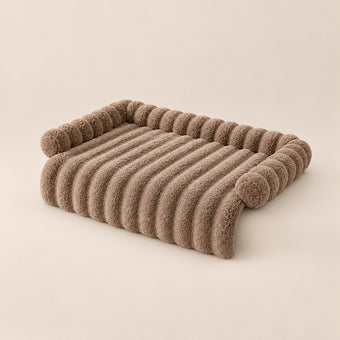
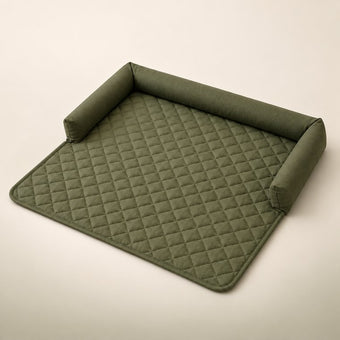
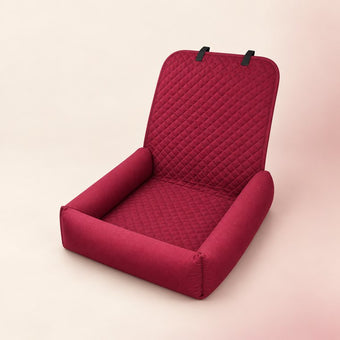
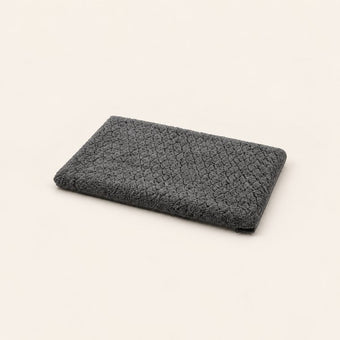
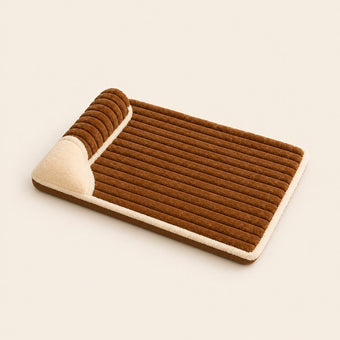
If accidents keep reaching the bedding, our waterproof dog bed collection lists the beds we sell as waterproof.
Does punishing a puppy for accidents work?
Scolding or rubbing a puppy's nose in it will only make him fearful, Humane World for Animals says. Punishment, including yelling during an accident, can make a dog afraid to go in front of you, even in the right spot, Best Friends Animal Society warns. It may also make him hide when he needs to go, which makes his signals harder to notice.
Potty training regression and its causes
According to Newport Veterinary Hospital, stress, new environments and loud noises can cause house-training setbacks. Accidents that continue after weeks of training can come from inconsistency, too much freedom too soon, distractions or an underlying health condition.
VCA advises consulting your vet whenever a previously house-trained dog starts having accidents. The IVHS SPCA notes that urinating indoors can be a sign of a urinary tract problem.
Helping him stay dry overnight
VCA notes that puppies may need overnight outings until they are 5 months of age. Humane World for Animals advises removing the water dish about two and a half hours before bedtime to reduce overnight accidents.
If he needs to go out during the night, keep the trip calm and quiet, as Newport Veterinary Hospital advises. Best Friends Animal Society advises against playing with the dog during trips to eliminate.
House-training an older or rescue dog
Best Friends Animal Society says house-training a dog can take days to weeks and goes more smoothly with a predictable routine. The IVHS SPCA says a dog's previous living conditions can predict how house-training will go, and Best Friends notes that a puppy trained on paper or in a litter box may prefer that surface for life.
Use the same routine as for a puppy: the same spot, and a reward as soon as he finishes outside. If a house-trained adult starts having accidents, see your vet before you change the training.
The same first three months are, according to the American Veterinary Society of Animal Behavior, the most important period for puppy socialization.
Questions people ask
What is the quickest way to potty train a puppy?
Take him out at the predictable moments: first thing in the morning, after eating, after naps and play, and last thing at night. Reward him outside the moment he finishes, and clean accidents with an enzymatic cleaner without scolding. Newport Veterinary Hospital recommends combining a consistent routine, supervised playtime, crate training and immediate rewards for the fastest results.
How long can a puppy hold his bladder?
A common rule of thumb from Humane World for Animals is about one hour for every month of age, so a three-month-old puppy may manage roughly three hours. Some puppies need to go whenever they get excited or active. They are less likely to need a break while sleeping.
How do I stop my puppy peeing in the house?
Supervise him indoors, take him out before he needs to go, and use a correctly sized crate when you cannot watch him. Clean every accident with an enzymatic cleaner so the smell does not draw him back. If a previously house-trained dog starts having accidents, the IVHS SPCA and VCA advise asking your vet to check for a medical cause.
Should I punish my puppy for having an accident?
No. The ASPCA notes that a dog will not learn anything from being scolded for a past accident, and Best Friends Animal Society warns that punishment can make a dog afraid to eliminate in front of you. Interrupt calmly if you catch him, take him outside, and reward him there.