Free guide · 10 pages
The Rest of the DayHow much dogs sleep, and when they should
A 2022 study of 1,330 dogs found that more sleep was not better. There was a middle, and dogs on either side of it had more reported behavior problems.
- What the sleep research found
- The day laid out hour by hour
- Why tired is not the same as rested
- Reading the legs, not the eyes
It arrives by email in a minute. You are signing up for Furmind emails. Leave whenever you like, one click.


Fix the evenings.
Ten illustrated pages, by email in a minute.
Evening behavior problems and their earlier cause
Adult dogs sleep most of the day and puppies sleep more than that. Almost every behavior problem that shows up in the evening was built earlier, by a dog who never got the chance to stop.
This page is the short version. The guide is the long one: free, no card.
How much sleep does an adult dog need?
An adult dog sleeps somewhere between twelve and fourteen hours across a day, and almost none of it in one block. It is broken into naps, taken wherever he happens to be, and interrupted constantly by anything worth checking.
That pattern is not laziness and it is not a sign of a dull life. Dogs are built to rest in fragments and to come fully awake in about a second. A dog who sleeps in a single stretch like a person is unusual; a dog who is up eleven times an hour is a dog who has not found anywhere he can commit to.
The number worth watching is not hours, it is whether he ever reaches the deep, sprawled-out, slow-breathing kind. A dog can spend fourteen hours lying down and get very little of it.
Puppy sleep: 18 to 20 hours a day
A young puppy needs something close to eighteen to twenty hours a day, and he will fight most of them. Left to his own devices he will stay awake as long as anything is happening, and then fall apart.
This is why nap schedules exist. Roughly an hour of being awake, then sleep, whether or not he agrees — a crate, a pen, a quiet room, somewhere the household stops arriving. Most owners describe their puppy as hyperactive in the evening and are describing a puppy who last slept at two.
The schedule is not for the puppy's benefit alone. Nearly every biting, screaming, wall-climbing hour has an unslept afternoon behind it.
What does an overtired dog look like?
Overtiredness in dogs does not present as slowing down. It presents as speeding up: mouthing harder, ignoring things he knows, grabbing trouser legs, unable to hold still for a second.
This is the single most misread state in dogs, because every instinct says a dog with this much energy needs more exercise. More exercise at that point is petrol. What he needs is somewhere boring to be, for an hour, with nothing to react to.
The test is cheap. When the evening goes bad, put him somewhere quiet instead of taking him out, and see which theory the next twenty minutes supports.
Dog zoomies and what their timing tells you
The sudden lap of the house at full speed with the back end tucked under is ordinary dog behavior and does not need fixing. Dogs do it after baths, after being let out, after something has been building up.
What is worth reading is when they arrive. Zoomies after a nap and a meal are a dog with energy. Zoomies at eleven at night from a dog who has been awake since morning are usually the overtired version, and they end in something being chewed rather than in sleep.
Same behavior, two different causes, and the clock tells you which.
Building a schedule the dog can predict
Dogs settle faster in a day with a shape to it. Not a timetable to the minute — a rough order that repeats, so that lying down does not feel like missing something.
The parts worth fixing in place are the ones he most wants to anticipate: when he eats, when he goes out, and when the house goes quiet. Everything else can move. A dog who knows the walk comes after you close the laptop stops asking about it every twenty minutes.
Sleeping through the night
A puppy sleeping through is mostly a bladder question first and a settling question second. Until he can physically hold it, no amount of training gets you an unbroken night, and treating a toilet need as a behavior problem teaches him not to ask.
Once the bladder can manage it, the rest is routine: last toilet trip late, no water fight, boring bedtime, and no new games at three in the morning. Adult dogs who suddenly stop sleeping through are worth a vet's attention rather than a training plan — pain and thirst change sleep before they change anything else.
Where do dogs sleep and why do they move at night?
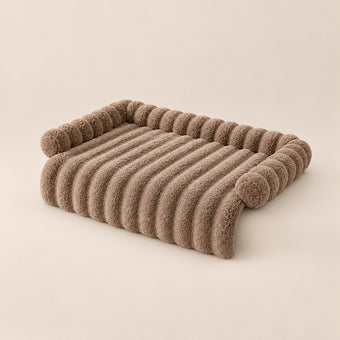
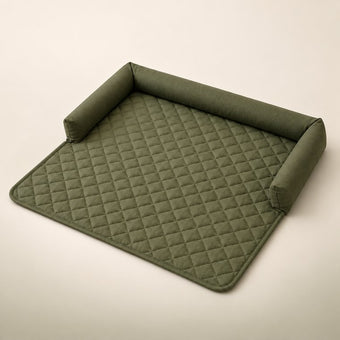
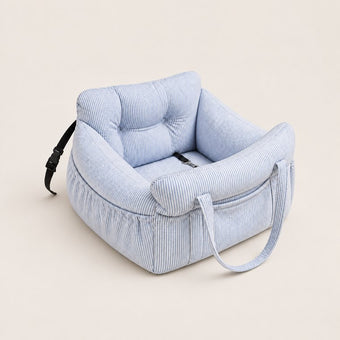
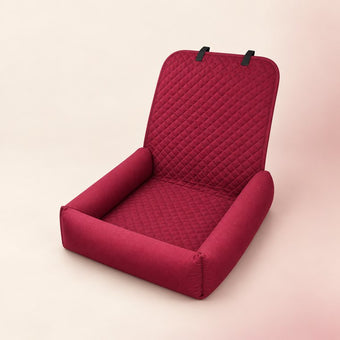
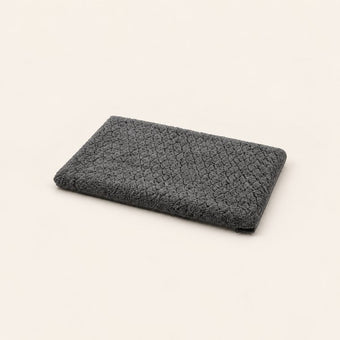
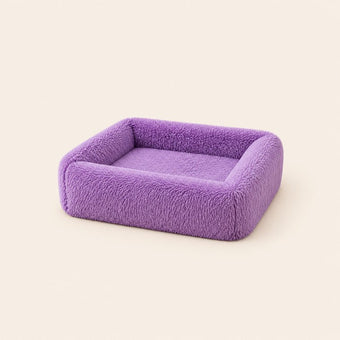
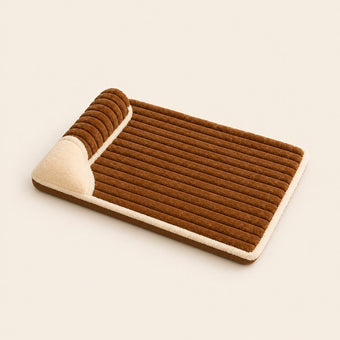
Most dogs have several places rather than one, and they use them for different things. A place to be near the household when it is busy, a place to be alone when it is not, and something on the floor when the room is warm.
A dog who abandons a bed he used to like is telling you something changed — the bed flattened, the room got warmer, or the traffic past it increased. Before replacing it, watch where he chose instead. He has already picked the surface and the location; the bed just has to meet him there.