Dog Beds With Sides: Types and How to Choose

Some dogs sleep pressed against something. Some sleep spread flat in the middle of a room. A raised edge is right for the first group and a waste of space for the second, and you can tell which one you have by watching for a week.
How to choose by sleeping position
Look at where your dog sleeps now, before it has a bed you chose for it. The position tells you more than any product description.
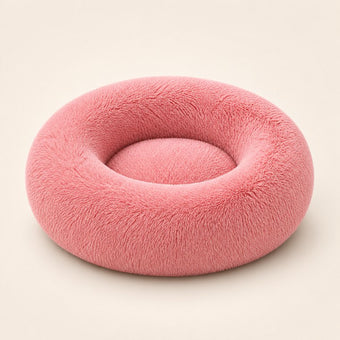
Curled, pressed into a corner or against furniture. This dog is looking for contact on at least one side. A rim gives it that, and somewhere to put its head.
Flat on its side, legs out, in open floor space. This dog wants surface area. A rim reduces the usable area and it will end up with its back against the edge rather than its head on it.
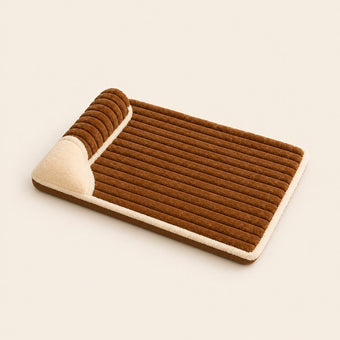
Head raised on something — a step, a cushion, a shoe. This is the clearest signal there is. The dog is looking for a headrest, and a bolster is exactly that.
Different positions at different times of night. Most dogs. In that case the answer is usually a bed with a rim on part of the perimeter, not all of it, so the dog can choose.
If you are not sure which shape your dog wants, the whole bed range is easier to scan by shape.
Flat vs bolster vs sofa dog beds
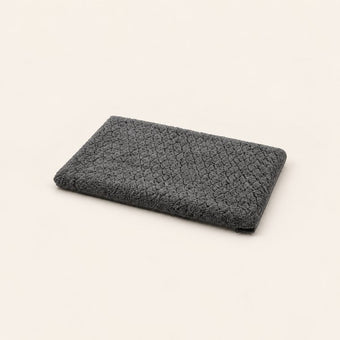
Flat mat or pillow. No edge. Maximum usable area for the footprint. Easiest to wash, easiest to fit in a crate or under a table, cheapest.
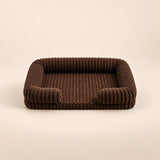
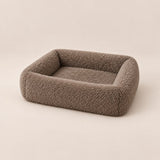
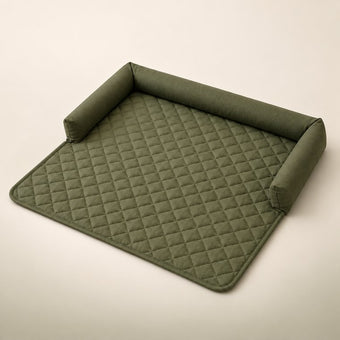
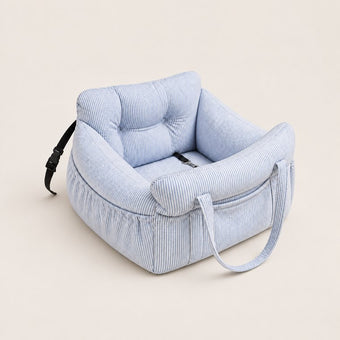
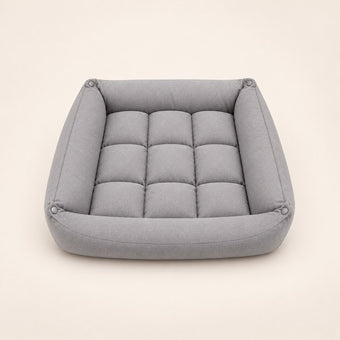
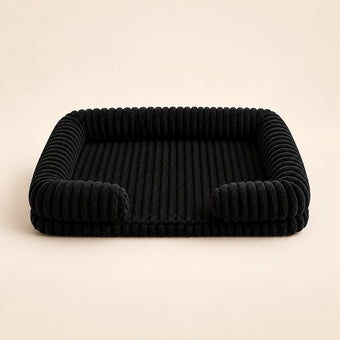
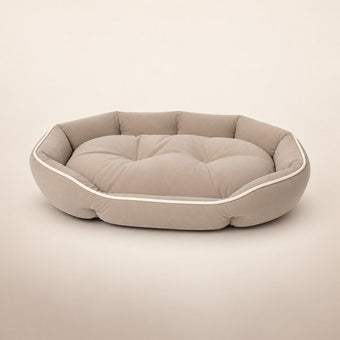
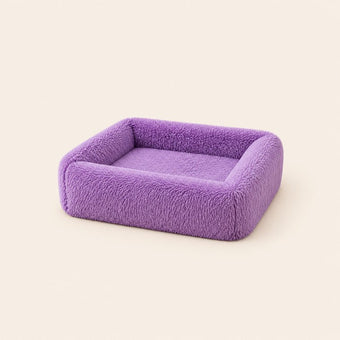
Bolster. A flat base with a raised edge around part or all of the perimeter. The rim is usually stuffed, sometimes with a foam insert. The dog gets a headrest and a back.
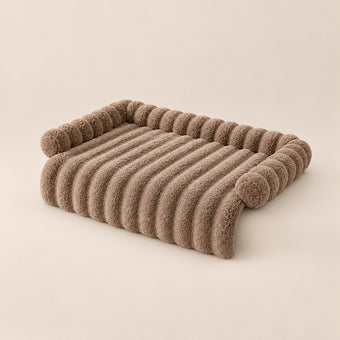
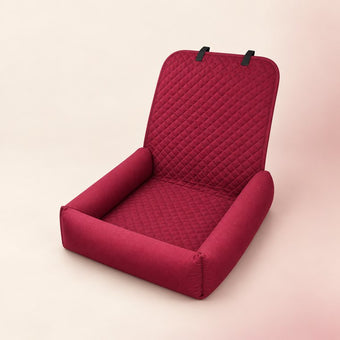
Sofa style. A raised back and two arms, open at the front, built like a small couch. The dog steps in over a low front edge and can lean on three sides.
Sofa-style beds with a back and arms take this furthest.
The practical difference between a bolster and a sofa is the entry. A bolster with a rim all the way round is a step to climb from every direction. A sofa has one open side, which is easier for a dog that does not lift its legs well.
A high rim is a step to climb, which is why beds for senior dogs are usually lower.
Downsides of a rim: lost sleeping area
A rim takes 10 to 15 cm off each side of the bed. On a bed advertised as 100 cm long, that can leave 70 cm of flat surface — which is a medium bed wearing a large label.
The number that matters is the usable sleeping area, not the outside width.
So a bed with sides needs to be bought a size up from a flat bed for the same dog. This is the most common reason a bolster bed "does not fit" a dog that measured correctly.
Rim firmness decides whether it works at all
A rim only helps if it holds its shape. Two constructions:
Stuffed with loose fibre. Soft at first, and it collapses. Within a few months the raised edge is a fold of fabric, the dog's head is back on the base, and the bed has become a flat bed with a lumpy border.
With a foam bolster inside. Keeps its height under weight. Costs more and is heavier.
You can often tell from the photos: a fibre rim looks rounded and slightly uneven; a foam bolster looks like a defined tube with a consistent diameter. If the listing does not say, the weight is a clue — a foam-cored rim adds noticeable weight.
The rim also needs something firm underneath it. A rim only works over a firm foam base; on a soft one the dog sinks below the edge and the rim ends up above its head rather than under it.
Washing a bed with sides
A stuffed rim makes a large, awkward wash load. Two things to check:
Whether the rim cover comes off separately from the base cover. Two smaller loads fit a domestic machine; one large one often does not.
Whether the rim itself is washable, or only its cover. If the stuffing is sewn in permanently, spills into the rim are a problem you cannot solve with a machine.
Cases where a flat bed beats a rim
Three cases where the rim is the wrong choice regardless of how the dog sleeps:
In a crate. There is no room to lose, and the rim pushes the dog into the middle.
In hot weather. A rim traps air around the dog and reduces the surface losing heat.
For a dog that chews. The rim is the part that gets chewed, and once it is open the stuffing comes out.
Dog bed with sides checklist
- The dog's current sleeping position points at a rim, not just your preference for how it looks.
- Internal length is nose-to-tail plus 15–20 cm, measured inside the rim.
- The rim has a foam core rather than loose stuffing.
- The base under the rim is firm.
- At least one side is low enough for the dog to step over easily.
- The rim cover and base cover wash separately.