Best Dog Beds: What to Check Before You Buy

The best dog bed is the one that matches how your dog sleeps and what you will have to clean: a flat foam base for a dog that sprawls, a bolster for one that curls, and a washable cover either way. Below is how to check each claim on the label before you pay for it.
Most dog bed listings describe the same four or five things, and the words used are not regulated. "Orthopedic," "waterproof," "cooling" and "chew proof" can all appear on a product that does not do the thing the word suggests. This page is a checklist for reading past the label.
It does not name a single best bed. There isn't one — the right bed depends on the size of the dog, how it sleeps, where the bed goes, and how often you are willing to wash it. What follows is the order we check things in.
Before any of this matters, measure your dog first. Size is the one mistake that cannot be fixed by choosing a better material.
Four things that differ between dog beds
Strip away the marketing and a dog bed is four decisions:

The fill. Loose polyester fibre, shredded foam, or a solid foam slab. These behave very differently under weight and they are the main reason two beds of the same size cost very different amounts.
The cover. Whether it comes off, what it is made of, and whether it survives a wash.
The base. Whether there is a non-slip layer, and whether there is a waterproof liner between the cover and the fill.
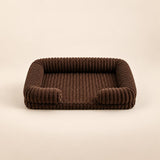
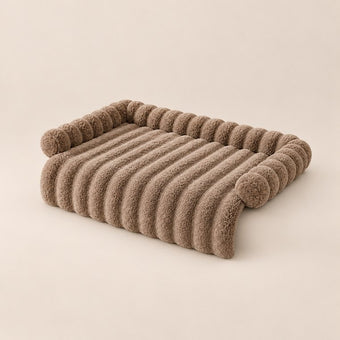
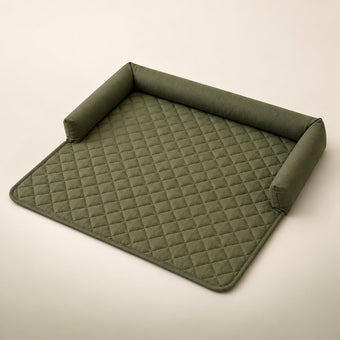
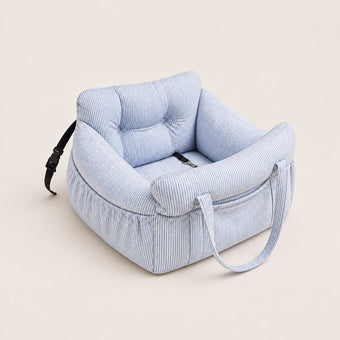
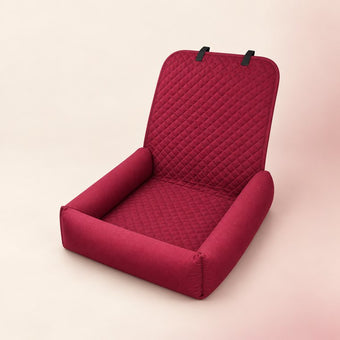
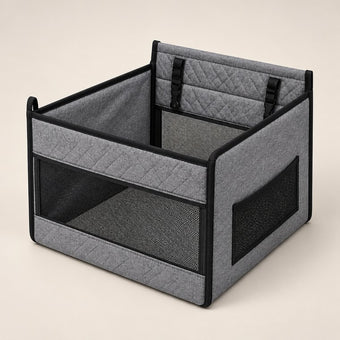
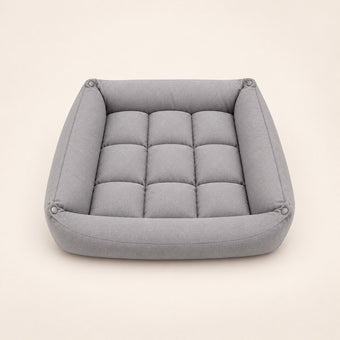
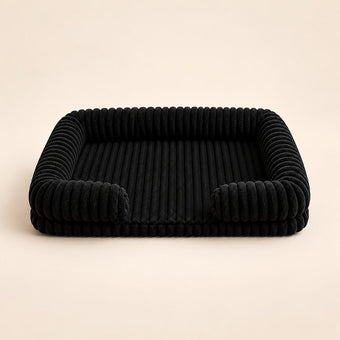
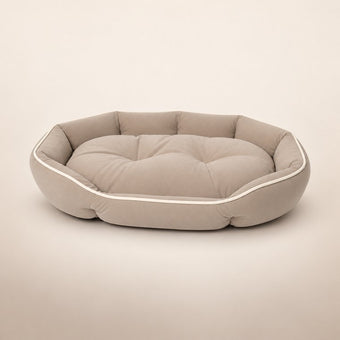
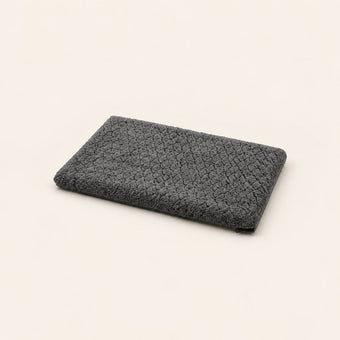
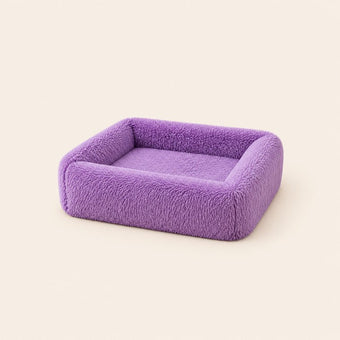
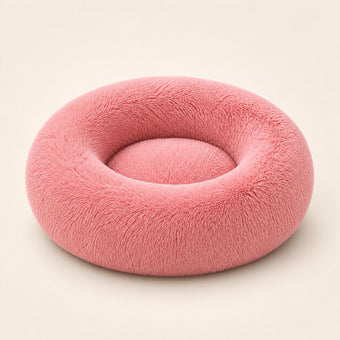
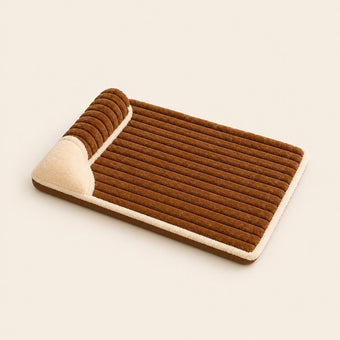
The shape. Flat mat, raised rim, full sofa, or a raised frame with fabric stretched across it.
Everything else — colour, pattern, the name of the range — does not change how the bed performs.
| Feature | What to check | Suits | Does not suit |
|---|---|---|---|
| Foam sold as orthopedic | The product page states the fill, thickness and total bed weight | A dog that sprawls or stays in one position through a long nap | A shopper relying on the word "orthopedic" without a stated construction |
| Waterproof protection | A coated outer or a separate liner that keeps liquid from the fill | A dog that has accidents, or a bed used by the back door | A bed whose cotton, canvas or faux-fur cover is the only claimed barrier |
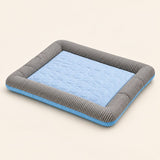
| Cooling surface | A named mechanism such as ice-silk, mesh or stretched fabric | A dog that leaves its bed for a cooler floor | A dog seeking warmth, or a listing that calls thinner padding "cooling" |
| Washable cover | A removable cover, a long enough zip and care instructions that name machine washing | A bed that needs frequent cleaning | A large cover that is too bulky for the available washer |
How to check an orthopedic claim: weigh it
A solid foam slab is heavy. Loose fibre is not. That difference is measurable, and it is the single most useful check on this page.

A bed roughly 85 × 53 × 27 cm made from solid foam weighs several kilograms. The ones we have verified in that size class come in between about 4 kg and 17 kg depending on thickness and density. The same footprint filled with loose fibre weighs 300 g to 2 kg.
So if a listing says "orthopedic" and the shipping weight is 1 kg for a bed the size of a suitcase, the foam is not there. There may be a thin foam sheet on top of fibre, which is not the same thing and will flatten.
Ask for the weight if it isn't published. A seller who cannot tell you what the bed weighs usually cannot tell you what is inside it either. That check is the reason a real foam core is worth paying for and a thin foam sheet over fibre is not.
The second check is the press test, which you can only do once the bed arrives: press down hard with a flat palm. Solid foam resists and springs back slowly. Fibre bottoms out against the floor and stays dented.
How to check a waterproof claim: look at the fabric
Waterproof is a material property, not a finish that can be added to anything.
Tightly woven synthetics — nylon, Oxford weave, coated polyester — hold water out. Leather holds water out. Cotton, canvas and faux fur do not, no matter what the listing says. If a product is described as waterproof and the material line says cotton, those two statements contradict each other and the material line is the one to believe.
There is also a difference between a waterproof *outer* and a waterproof *liner*. A liner sits between the cover and the fill, so liquid that gets through the cover still stops before the foam. That is usually the more useful of the two, because the cover is the part that goes in the wash anyway.
We wrote a separate piece on what a waterproof claim should mean because the word gets used loosely.
How to check a cooling claim: name the mechanism
There are three ways a bed can move heat away from a dog, and a listing should be able to say which one it uses:
1. A gel layer or a gel-infused foam, which absorbs heat from contact.
2. A water-fill chamber, which you fill yourself and which stays at room temperature.
3. A breathable weave — ice silk, mesh, or a stretched frame fabric — which lets air move through instead of trapping it.
What is *not* cooling: a thinner polyester bed sold as a "summer" version. Less padding is not the same as heat transfer. If the only difference between the summer model and the winter model is the thickness, it is a thinner bed.
In summer that changes the shortlist, and beds made to move heat away become the first thing to look at.
For outdoor use the calculation is different, and raised beds and what they change is covered on its own.
How to check a washable claim: find the zip
"Washable" is used for three different things:
- The whole bed goes in the machine.
- The cover comes off and goes in the machine.
- The surface can be wiped.
Only the first two involve a washing machine. Look for a zip that runs far enough around the bed that the cover comes off — a short zip on one edge means you are peeling a fitted cover off a foam slab, which is a five-minute job every week rather than a five-second one.
Then check the size against your machine drum. A large-dog cover can be too bulky for a domestic washer even when the fabric is machine-safe. That is a size problem, not a fabric problem, and it is worth knowing before the bed arrives.
It is why we group beds with a cover you can take off and wash on their own page.
Shape follows how your dog sleeps
Watch the dog for a week before deciding. There are three patterns and they point at different beds:

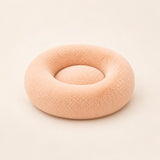
Curls up, presses against something. A raised rim gives the head somewhere to rest and a back to lean on. Dogs that sleep against something do better on beds shaped like a small couch.
Sleeps stretched flat, often on the floor. A flat mat or a large rectangular bed. A rim just reduces the usable area.
Moves around, sleeps half on and half off. The bed is probably too small. Go up a size before you change the shape.
Dog bed claims to ignore
Breed-specific beds. A bed sized for a Labrador is sized for any dog of that length and weight. The breed name on the listing does not change the dimensions.
"Anti-anxiety" as a product feature. A bed with high sides may help a dog that likes to burrow. It is not a treatment, and a listing that presents it as one is overstating what a bed does.
Very low prices on large foam beds. Foam is the expensive part. A large bed sold for less than a small one usually differs in what is inside it, and the weight will show you.
Dog bed types to start with
- Large dog beds suit a dog whose measured sleeping length needs more uninterrupted surface than a smaller bed provides.
- Cooling dog beds suit a dog that leaves padded bedding for tile or another cooler surface.
- Waterproof dog beds make sense when accidents, wet coats or a back-door location make liquid protection the deciding feature.
And if you have not measured yet, do that before anything else. Every other decision on this page can be corrected later. Size cannot.
Quick answers
What kind of dog bed is best?
The right kind follows the sleeping position: a flat bed for a dog that sprawls, a bolster for one that curls, and enough internal length for the whole body. Compare those shapes in dog beds, then check the fill and cover instead of trusting the category name.
What is the most comfortable bed for dogs?
Comfort is a fit question, not a single material: sprawlers need uninterrupted surface area, while curlers often use a raised edge. Start with dog beds, then choose by measured length, usual sleeping shape and what the cover will have to handle.
What dog bed do vets recommend?
We do not claim a veterinary recommendation, and there is no single bed that suits every dog. Use dog beds to look for a stable sleeping surface, a removable cover and enough room for your dog to lie fully stretched.
Where to go next
 CollectionDog BedsEvery shape in one place: flat beds, bolsters and sofa beds
 CollectionLarge Dog BedsRoom to stretch out for big and giant breeds
 CollectionCooling Dog BedsIce-silk mats for dogs that leave the bed for the tile
 CollectionWaterproof Dog BedsBeds and layers that keep liquid on the surface
 JournalDog Bed Sizes: How to Measure Your DogHow to measure your dog before you choose a size
 JournalBest Dog Beds for Senior DogsEntry height, foam and washing for an older dog